understanding clock mechanics a beginners guide to timekeeping
Timekeeping is an essential part of our daily lives, and understanding the mechanics behind clocks can enhance your appreciation for this art. In this guide, we will explore the fundamental components and workings of various types of clocks, equipping you with the knowledge to appreciate timekeeping in a new light.
The Basics of Timekeeping
At its core, timekeeping involves the measurement of time intervals. Clocks achieve this using various mechanisms, each with its unique advantages and characteristics. The two primary types of clocks are mechanical and electronic. Mechanical clocks rely on physical movements, while electronic clocks use electronic components to keep time.
Mechanical Clocks
Mechanical clocks operate through intricate systems of gears, springs, and weights. The heart of a mechanical clock is the escapement mechanism, which regulates the release of energy from the mainspring, converting it into controlled ticks. This is what allows the clock hands to move at a consistent pace.
When learning about mechanical clocks, it is vital to understand the role of the pendulum. Introduced by Christiaan Huygens in the 17th century, the pendulum contributed significantly to the accuracy of timekeeping. The period of the pendulum's swing is what determines the timing, making it a crucial element in many traditional clocks.
Key Components of Mechanical Clocks
1. **Mainspring**: This is the coiled spring that stores energy when wound and releases it over time to power the clock.
People Also Look For:
- Klass Home 60cm Black Metal Large Wall Clock INDOOR / OUTDOOR | Silent Non-Ticking Roman Numerals Clocks For Living Room | Bedroom...
- VIKMARI Kitchen Wall Clock, Small Vintage 12 Inch Rooster Chicken Clock, Silent Non Ticking Wooden Wall Clocks Decorative for Bedr...
- EMITDOOG Wall Clock Modern Kitchen Small Silent Analog Round Simple Quiet Quartz Black Wall Clocks Battery Operated Non Ticking fo...
- MeesMeek Kitchen Clock Timer: 99H 59M 59S Countdown Countup Rechargeable Interval Digital Timer, 7.8\'\' Large LED Display with 3 ...
- Domigard G Lamp Wireless Charger, Night Lights with Bluetooth Speaker & Alarm Clock, LED Atmosphere Lamp for Bedroom, Birthday Gif...
2. **Escapement**: This component regulates the flow of energy, ensuring that the clock ticks consistently.
3. **Gear Train**: A series of gears that transmit the motion from the escapement to the clock hands, converting rapid movements into slower, readable time.
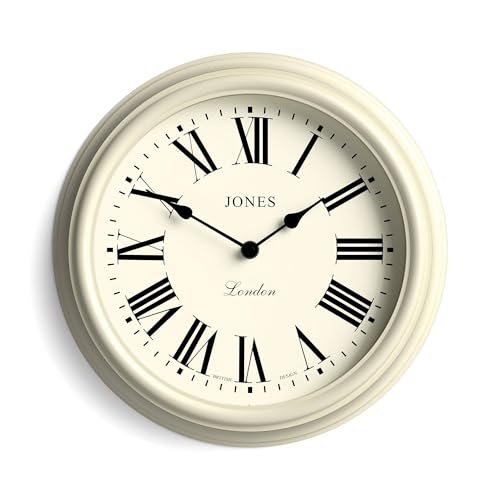
4. **Dial and Hands**: The face of the clock that displays the time, with hands that move to indicate hours, minutes, and sometimes seconds.
Electronic Clocks
In contrast to mechanical clocks, electronic clocks are powered by batteries or mains electricity and use quartz crystals for accuracy. A quartz clock contains a small piece of quartz crystal that vibrates at a precise frequency when an electric current passes through it. This frequency is then converted into time signals, allowing for highly accurate timekeeping.
Choosing the Right Clock
When selecting a clock, consider your needs and the environment where it will be placed. Wall clocks, mantel clocks, and wristwatches each serve different purposes. For instance, wall clocks with large numbers are ideal for public spaces, while intricate mantel clocks may be more suitable for decorative purposes.
Maintaining Your Clock
To ensure your clock remains accurate and functional, regular maintenance is key. For mechanical clocks, winding them periodically is essential to keep them operational. Additionally, dust and dirt can accumulate in the gears and mechanisms, so cleaning is crucial. For electronic clocks, replace batteries as needed and keep the clock free from moisture and extreme temperatures.
Understanding Time Zones
In today's globalised world, understanding time zones can enhance your ability to coordinate with others. The earth is divided into 24 time zones, each representing one hour of the 24-hour day. Familiarising yourself with major time differences can be advantageous, especially for travel and communication.
Conclusion
By exploring the mechanics of clocks and understanding their components, you can develop a deeper appreciation for the art of timekeeping. This knowledge not only enhances your experience but also equips you with the skills needed to select, maintain, and care for your timekeeping devices effectively.